
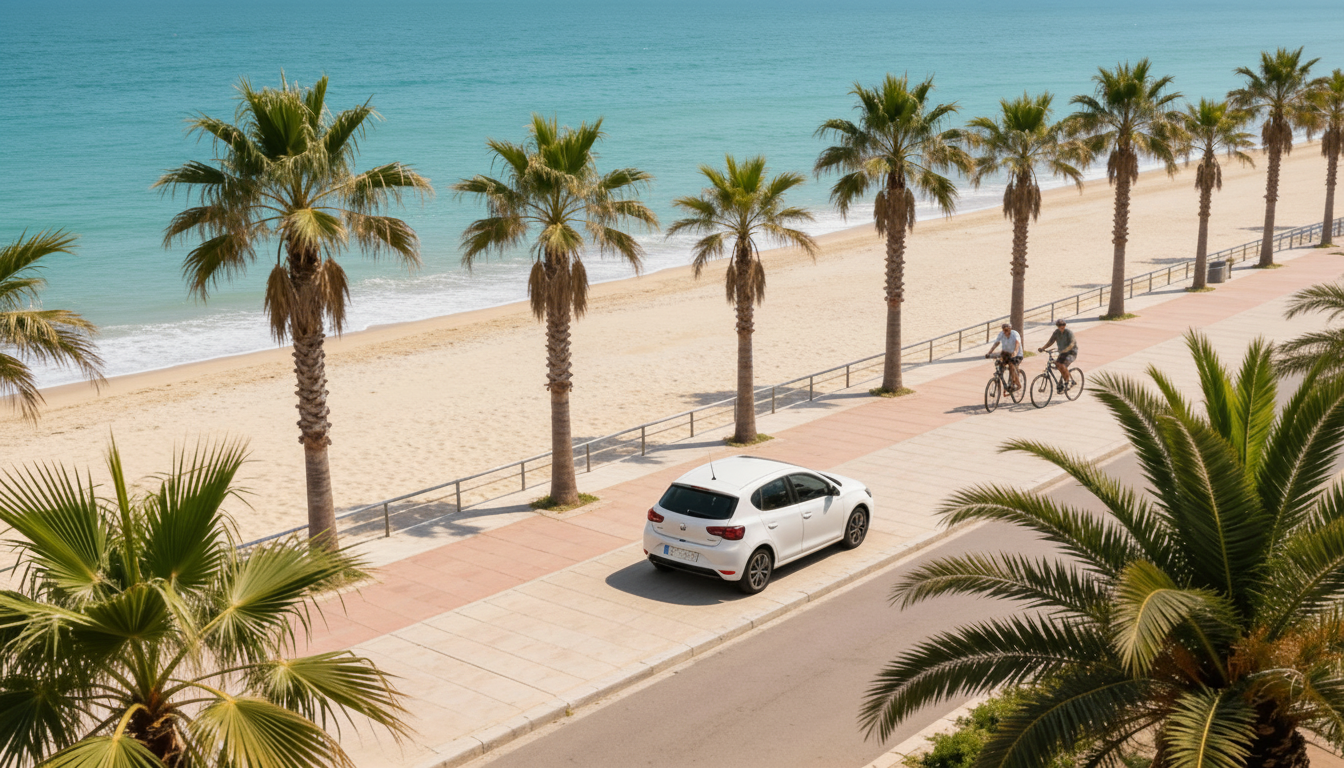
Car rental Mallorca: Everything you need to know for your perfect Mallorca road trip
Planning your dream vacation to Mallorca? With its stunning beaches, picturesque villages and vibrant nightlife, it is no wonder this Balearic island remains a favourite for travellers from all over Europe and beyond. To really discover the “real” Mallorca – from remote coves to mountain villages – renting a car is one of the smartest choices you can make.
This guide walks you through everything you need to know about car hire in Mallorca, helps you avoid common pitfalls and shows you how to save money using the dedicated car rental section on mallorcard.es.
Why car rentals are (almost) a necessity in Mallorca
Mallorca has a decent public transport network, especially between Palma and larger towns, but:
- Many of the best beaches, viewpoints and villages are not easily reached by bus, especially outside high season or in the evenings.
- Mountain roads in the Serra de Tramuntana and routes to coves like Cala Tuent, Sa Calobra or Cala Mondragó are much easier with a car.
- A rental car lets you combine several stops in one day and adjust plans spontaneously if the weather or your mood changes.
If you want more than just one resort and the nearest beach, a car turns your Mallorca holiday into a flexible road trip rather than a fixed package.
Key tips for renting a car in Mallorca
1. Book early for the best deals
Car hire demand in Mallorca is very high from May to September and during Easter and school holidays.
- Book weeks or months in advance to secure lower prices and more choice, especially for smaller, cheaper cars.
- Last‑minute rentals at the airport are usually more expensive and limited in choice.
For current partner offers and promo codes, check the Car Hire category on mallorcard.es, where all active deals are listed in one place.
2. Choose the right vehicle
- City and village driving: A small or compact car is ideal for narrow streets and easier parking in old towns like Palma, Sóller or Alcúdia.
- Mountain & long distances: A slightly larger car or SUV can be more comfortable for Serra de Tramuntana hairpin roads and longer drives.
- Electric & hybrid: EVs and hybrids are increasingly available; most rental cars already have environmental stickers needed for Palma’s low emission zone.
Think realistically about luggage, passengers and where you will drive – not just about the “coolest” model.
3. Understand local traffic rules
Key rules for driving in Mallorca (Spain):
- Drive on the right, seat belts are mandatory for all passengers.
- Typical speed limits: 120 km/h on motorways, around 90 km/h on many rural roads and 30–50 km/h in towns and villages; watch for signs and speed cameras.
- Alcohol limit is low (0.5 g/l), and phone use without hands‑free is prohibited.
- In Palma’s old town there are limited traffic / low‑emission zones; rental cars usually have the correct sticker, but you should still respect signs and restricted streets.
Always carry: driving licence, rental contract, ID/passport and insurance documents.
4. Parking and “zona azul”
Parking can be tricky in popular areas like Palma, Port de Sóller and beach resorts. Basic colour codes:
- Blue lines (zona azul): Paid parking; you need a ticket from the nearby machine and must display it behind the windscreen. Often free at night or on Sundays.
- White lines: Usually free parking (but check local signs for time limits or market days).
- Yellow lines: No parking – fines can be high.
In very busy areas it can be easier to use official car parks or underground garages than trying to find street parking.
5. Check the car before you leave
Before you drive away from the rental station:
- Walk around the car and take photos or a short video of all sides, wheels and interior to document existing damage.
- Make sure all scratches and dents are noted on the rental form.
- Check fuel level, mileage and that warning lights are off.
This protects you if the company later tries to charge you for pre‑existing damage.
6. Know the insurance options
Most rentals in Mallorca include a basic insurance with an excess (deductible). To avoid stress and unexpected costs, you can:
- Book full coverage / zero‑excess directly with the rental company.
- Or use separate excess insurance from a third party.
- Check if your credit card already provides rental car coverage – and under what conditions.
Always read what is actually included (tyres, glass, underbody, roadside assistance) before you decide.
Fuel policy and hidden fees
Fuel policies in Mallorca
The two main fuel policies are:
- Full‑to‑full: You receive the car with a full tank and return it full. Usually the fairest and cheapest option.
- Full‑to‑empty: You pay for a full tank at pick‑up and can return it almost empty. Convenient, but often more expensive because fuel and service fees can be higher.
Whenever possible, choose full‑to‑full and keep your fuel receipt in case the company questions the level on return.
Common extra charges to watch out for
- Extras: GPS, child seats, additional drivers and out‑of‑hours pick‑ups may have extra fees.
- Tolls & fines: There are currently no motorway tolls on Mallorca, but speed or parking fines will be passed on to you with an admin fee.
- Cleaning fees: Very dirty cars (sand, food, smoke) can incur cleaning charges – try to keep the car reasonably clean.
Read the terms and conditions carefully so you know what you are signing.
Licence, age and documents
- EU/EEA licences are generally valid in Spain as long as they are valid for the duration of your trip.
- For licences from outside the EU/EEA, many companies recommend or require an International Driving Permit (IDP) in addition to your national licence.
Typical age rules in Mallorca:
- Minimum age is usually 21 years, sometimes 23, often with at least 1 year of driving experience.
- Drivers under 25 almost always pay a young driver surcharge per day.
- Some companies have upper age limits or special rules for older drivers.
Check the exact conditions before you confirm your booking.
What to do if you get a parking ticket
Even if you try to be careful, it is easy to get a parking ticket in busy areas or blue zones. What happens next depends on the type of ticket:
Blue zone ticket (zona azul)
If you find a notice on your windscreen in a blue parking zone, it usually means that your paid time has expired or you forgot to buy a ticket. In many Mallorcan towns you can:
- Use the same parking meter (or the app, if available) to cancel or reduce the fine within a short period by entering your number plate or ticket number and paying a small fixed fee. This is often only possible within around one hour and reduces the penalty to a few euros instead of a full fine.
- Instructions are printed on the ticket (often in Spanish/Catalan), but icons show you which machine or website to use.
If this option is no longer available or not offered in that town, the notice turns into a normal fine that you must pay via the local authority.
Full parking or traffic fine
If you parked in a forbidden yellow zone, ACIRE/old‑town access zone, blocked an exit or missed the quick‑payment window, the ticket becomes a standard municipal fine:
-
The ticket or later letter will show a reference/expediente number, amount and the responsible town hall (Ajuntament).
-
You can usually pay:
- Online via the municipal website, using the reference number and your details.
- At certain banks or ATMs that accept fines via barcode or reference number.
- In person at the local tax office or town hall payment office.
If you pay within the early‑payment period (often 10–15 days), you normally get around 50% discount on the fine.
If your rental car gets towed
In cities like Palma, incorrectly parked cars can be towed:
At the place where your car was, you will usually find a sticker or sign indicating that the tow truck (grua) has taken it and a phone number or address of the tow depot.
Alternatively, call the local police (092) to find out where your car is and what you need to bring.
To collect the car, you typically need your ID, rental contract or licence plate number and a payment card or cash to pay towing and storage fees. The actual fine may be paid separately via the town hall.
Special note for rental cars
For rental cars you should always pay fines promptly:
- If you ignore a ticket, the authorities will send it to the rental company, which will then charge you the amount plus an administration fee to the credit card used for the booking.
- Ideally, pay the fine yourself, keep the receipt and, if necessary, send a copy to the rental company as proof that everything has been settled.
How to find current discounts with mallorcard
Instead of listing individual partners and promo codes that may change over time, mallorcard.es has a dedicated Car Hire section where you will always find:
- The current list of partner rental companies on Mallorca.
- All valid promo codes and discount levels.
- Details on what each offer includes (full cover, no deposit, second driver, airport pick‑up, etc.).
Before you book, simply:
- Visit the Car Hire category on mallorcard.es.
- Choose the provider and offer that best fits your dates and needs.
- Enter the promo code shown there in the booking form of the rental company.
This keeps your road trip cheaper without needing to update this guide every time a code changes.
Sustainable travel tips
Mallorca is actively working on reducing emissions and protecting its landscapes. You can support this by:
- Choosing electric or hybrid vehicles when available.
- Sharing the car with friends or family instead of renting several vehicles.
- Avoiding driving into sensitive natural areas or parking off‑road in dunes and protected zones.
Closing comments
Car rental in Mallorca does not have to be stressful. With a bit of early planning, understanding of local rules, knowing what to do if you get a parking ticket and smart use of the car hire offers collected on mallorcard.es, you can enjoy a smooth, flexible and good‑value road trip experience.
Pack your luggage, buckle up and let the beauty of Mallorca unfold in front of your eyes – from winding mountain roads and hidden bays to lively towns and quiet villages, all at your own pace.