
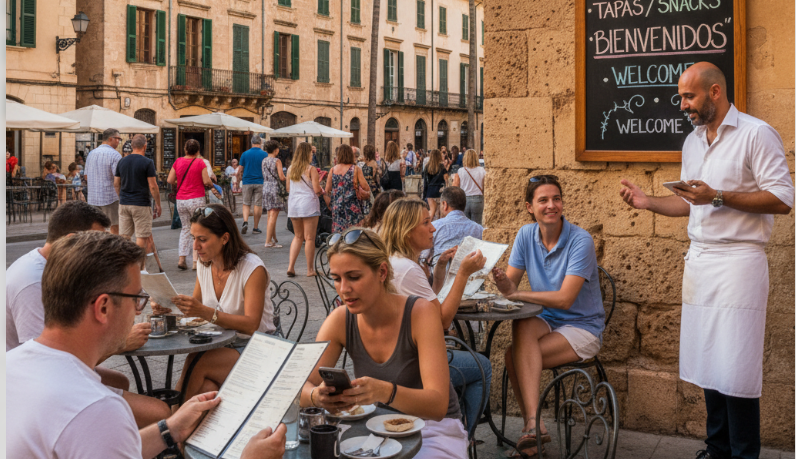
Yes, they do speak English in Mallorca and in all major tourist areas you will get along very well with English only. At the same time, the island’s official everyday languages are Spanish and Catalan (locally Mallorquín), which shape the character of each region and how “international” or “local” it feels.
Official Languages vs. Tourist Languages
Mallorca has two official languages: Spanish (Castellano) and Catalan, with Mallorquín as the local Catalan variant. You will see both Spanish and Catalan on street signs, public buildings and official documents, and locals often switch between them naturally. English is not an official language, but functions as the main “tourist language,” especially in hotels, resorts and service businesses.
Where English Is Very Widely Spoken
Palma and the Bay of Palma
In Palma de Mallorca – the island’s capital – English is widely spoken in hotels, restaurants, cafés, shops and tourist attractions. In the historic centre, around the cathedral, La Lonja and the marina, many staff switch easily between Spanish, English and often German. Younger people, hospitality workers and those in tourism-related jobs generally have at least conversational English, so you can check in, order food, shop and ask for directions in English without problems.
Southwest: Magaluf, Palmanova, Santa Ponsa
The southwest coast has a strong British and Irish visitor base, so English is extremely common in Magaluf, Palmanova and Santa Ponsa. Pubs, sports bars, international restaurants and many shops operate in English as their primary foreign language, with menus and signs often written first in English, then Spanish. Here you can easily spend an entire holiday speaking almost nothing but English.
North: Alcúdia and Port d’Alcúdia
Alcúdia and its port area are also very international, popular with families, cyclists and package-holiday visitors from the UK, Germany and Scandinavia. English is widely spoken in hotels, beach bars, tourist shops and excursion offices along the bay. In the old town of Alcúdia, you will find more Spanish and Mallorquín in the background, but service staff are used to switching to English when needed.
East Coast Resorts: Cala Millor, Cala d’Or & Co.
On the east coast, in resorts like Cala Millor, Sa Coma, Cala Bona and Cala d’Or, English is common in tourism-facing businesses, though you will also hear a lot of German. Menus are typically multilingual, and hotel staff, tour desks and rental offices handle English queries routinely. In these coastal zones, visitors with only English won’t struggle to manage daily life.
Where English Is Less Dominant
Inland Villages and Rural Areas
Away from the main resorts – in central villages like Sineu, Petra, Santa Margalida or Porreres – everyday language is mostly Mallorquín and Spanish. Some people, especially older residents or those not working in tourism, speak limited English or none at all. You can still get by with simple English plus gestures, but basic Spanish phrases (hello, thank you, the bill, water, directions) help a lot and are usually appreciated.
Tramuntana Mountain Villages
In beautiful mountain villages such as Deià, Valldemossa, Sóller and Fornalutx, you’ll find a mix. Tourism is important, so hotels, restaurants and shops that cater to visitors usually speak English; at the same time, the local population uses Mallorquín and Spanish in daily life. In a café filled mostly with locals, Spanish is your best bet, but in more touristy venues, switching to English is typically no problem.
Regional Overview: How “English-Friendly” Is Each Area?
- Palma and Bay of Palma: Very English-friendly in tourism and services, Spanish/Catalan in local life.
- Southwest (Magaluf, Palmanova, Santa Ponsa): Extremely English-oriented, especially nightlife and pubs.
- North (Alcúdia, Port de Pollença): English widely used in resorts, more Spanish/Mallorquín in traditional settings.
- East Coast Resorts: English common in hotels and tourist businesses, alongside German and Spanish.
- Interior and Small Villages: English limited; basic Spanish or Catalan phrases very helpful.
- Tramuntana Villages: Tourist spots speak English; everyday life is mostly in Spanish/Mallorquín.
Is It a Problem if You Only Speak English?
For a typical Mallorca holiday centred on Palma or the main resort zones, speaking only English is not a problem. You can book accommodation, eat out, use public transport in key corridors, rent a car and join excursions all in English. If you plan to spend more time in rural areas, markets or very local bars, a few Spanish basics will make life easier and interactions friendlier.
Using Local Expertise to Plan Where to Stay
Because the level of English varies by area, it helps to choose your base with this in mind. Island-focused platforms like mallorcard.es specialise in Mallorca and can give you a clear overview of which regions are more international and which are more traditional, helping you match your language comfort level with the right part of the island.
If you want a very English-friendly experience with lots of international nightlife, a place like Magaluf or Palmanova might suit you; if you prefer a more local feel, you might aim for smaller towns and use Palma or nearby resorts as your “English anchor.” In both cases, consulting a dedicated Mallorca resource such as mallorcard.es before booking makes it easier to choose the right area, understand what to expect linguistically and plan day trips that balance comfort with authentic local encounters.