
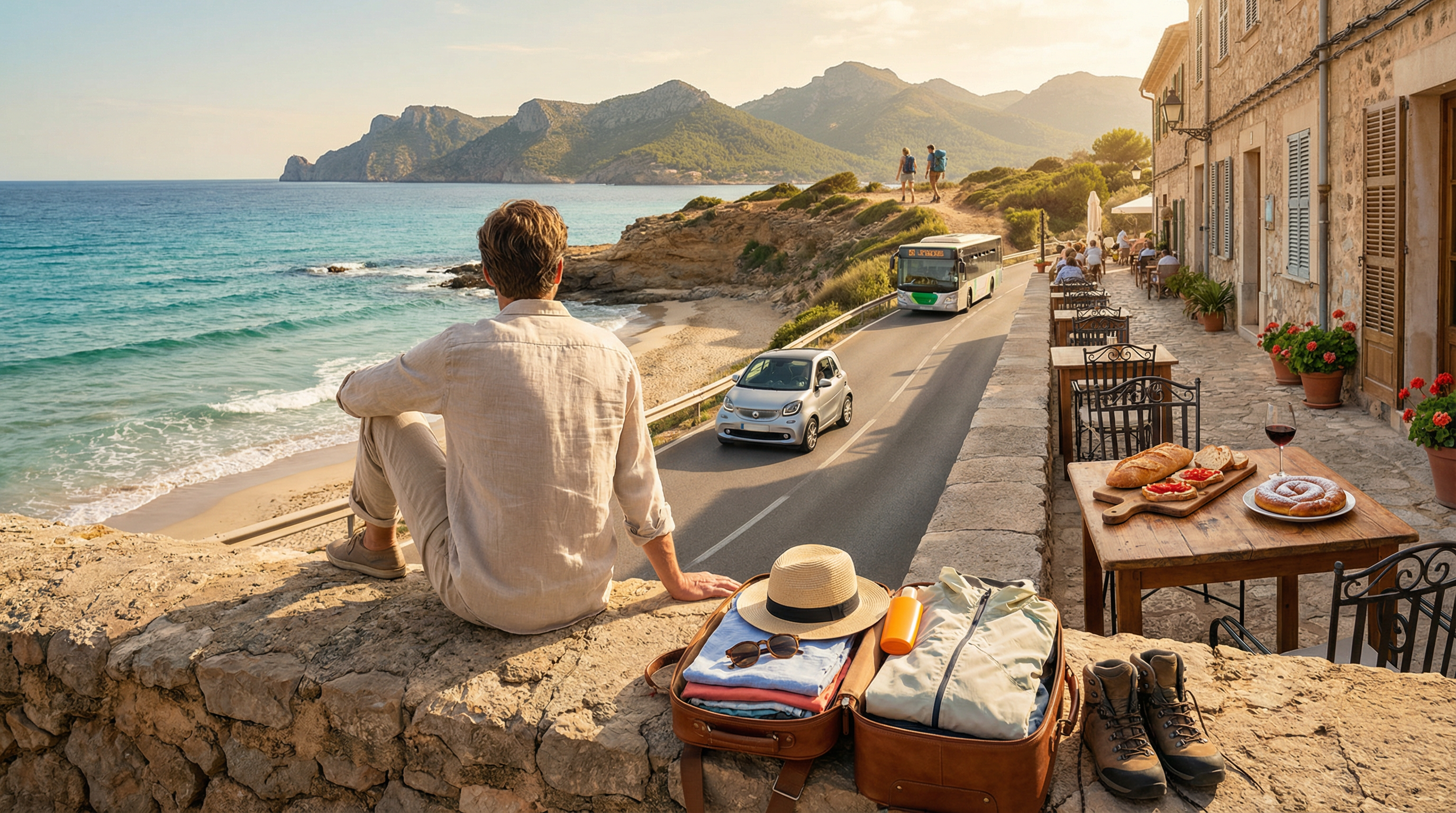
Mallorca, the largest of Spain’s Balearic Islands, is a stunning Mediterranean destination known for its beaches, charming villages, and rich culture. Whether you’re planning a relaxing break or an active trip, these Mallorca travel tips – including the best month to visit and typical climate – help you getting a better overview about the best time to visit Mallorca, the Mallorca weather by month and how to plan a Mallorca holiday.
1. Best time to visit Mallorca (by month and season)
For most travellers, the best time to visit Mallorca is the shoulder season: late spring (May–June) and early autumn (September–October). In these months you typically get warm, pleasant weather, swimmable sea temperatures, fewer crowds than in July and August, and better value on hotels and flights.
- March - April: Mild spring, great for hiking and cycling, cooler sea, quieter resorts.
- May - June: Warm and sunny, beaches start to fill, ideal mix of climate and prices.
- July - August: Hottest and busiest period, very lively resorts, highest accommodation and flight prices.
- September - October: Warm sea, slightly cooler air than midsummer, fewer crowds, good balance for beach and activities.
- November - February: Cooler, more changeable, best for city breaks and walking rather than full beach holidays.
2. Getting around Mallorca
Whether you need a car in Mallorca depends on when and where you travel. In peak summer, traffic and parking in some resorts can be busy, but a car still gives maximum flexibility for exploring coves, villages and viewpoints on your own schedule. Outside high season, driving is generally more relaxed and makes it easy to combine beach days with mountain or inland excursions.
If you prefer not to drive, Mallorca’s public transport network connects Palma with many major resorts and towns by bus and train, which works particularly well in spring and autumn when timetables are frequent and the temperature at bus stops is more comfortable.
To keep costs under control, you can also use Mallorcard to access selected deals and discounts with partner car rental companies on Mallorca. This lets you compare offers, secure better rates on hire cars and combine your rental with savings on activities and excursions booked through the same platform, which is particularly attractive in peak months when prices are higher.
3. What to pack for Mallorca’s climate
Because the climate changes across the year, packing also depends on your travel month. For late spring to early autumn you’ll want light clothing, swimwear, sandals, sunglasses, a hat and high‑SPF sunscreen, plus a light layer for evenings, especially in May, June, September and October. In winter and early spring, add a warmer jacket or fleece, closed shoes and a compact umbrella, as evenings can feel cool and mountain areas can be noticeably colder than the coast.
If you plan to hike in the Tramuntana mountains at any time of year, bring sturdy walking shoes, a small daypack and enough water; in summer, start early in the morning to avoid the midday heat.
4. Explore more than just the beaches
Searches like “things to do in Mallorca besides the beach” often lead to Palma, Sóller, Valldemossa, Deià and the Tramuntana mountains. These destinations work well in almost every season, but the experience changes with the month: in cooler months you can enjoy city walks, markets and mountain viewpoints with fewer people, while in warmer months you can combine sightseeing with swimming and boat trips. Visiting the capital Palma for its cathedral, old town and markets is a good idea year‑round, while Sóller, Valldemossa and Deià are especially pleasant in spring and autumn when it’s not too hot for walking.
5. Local food and what to try
Traditional Mallorcan dishes such as tumbet (vegetable bake), pa amb oli (bread with olive oil, tomato and toppings), sobrasada (cured sausage) and sweetensaimadas are available all year, but local markets feel especially lively in spring and early summer when seasonal produce is at its peak. In the hotter months, lighter dishes, salads and fresh fruit are popular, while in cooler months you’ll see more hearty stews and baked dishes on menus. Tasting local wine or a small glass of hierbas is a nice way to round off a meal whatever the season.
6. Customs, language and simple etiquette
Mallorca is very used to international visitors, but a few polite habits go a long way. Basic greetings and polite phrases are appreciated in every month of the year. A few Spanish words like “hola”, “buenos días”, “por favor” and “gracias” are appreciated, especially in smaller towns and at local markets. Modest clothing in churches and respectful behaviour at local events are always appropriate, regardless of the season.
7. Sun safety and hydration across the seasons
From late spring to early autumn, the Mediterranean sun can be strong, particularly in the middle of the day. Even in May and September it’s easy to underestimate the UV intensity, so regular sunscreen, a hat, sunglasses and plenty of water are essential. In midsummer, it’s sensible to plan outdoor activities for early morning or late afternoon and use the hottest hours for shade, lunch or a siesta. In winter there are still many sunny days, but temperatures are milder and the risk of overheating is lower.
8. Responsible travel and Mallorca’s environment
Mallorca’s coastline, rural interior and mountain landscapes are a big part of why people love the island, so “responsible travel in Mallorca” is increasingly mentioned in travel guides. You can help preserve these areas by staying on marked trails, taking litter with you from beaches and picnic spots, using recycling facilities where available, and respecting protected zones and local wildlife. Choosing local markets, family‑run restaurants and small businesses over generic chains also supports the island’s communities and character.
9. Festivals and events throughout the year
Mallorca hosts festivals across the calendar, which means your travel month can also influence the cultural experiences you find. Around June you may encounter Sant Joan celebrations with bonfires and beach gatherings, while in autumn, fairs such as the Fira de Tardor in Pollença showcase crafts, food and family‑friendly activities. Winter and early spring often bring local fiestas, processions and markets that give a more authentic glimpse of island life beyond the summer season.