
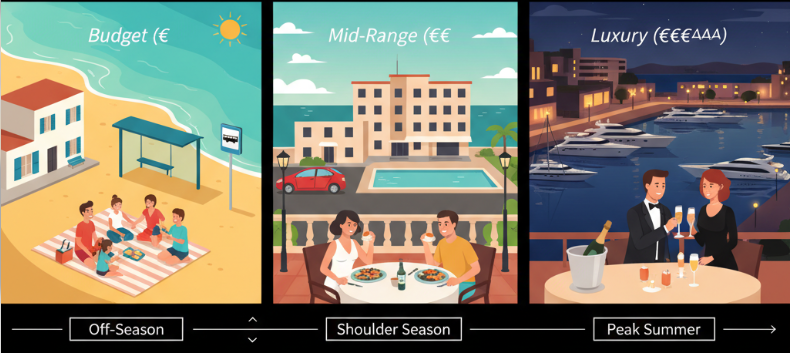
Mallorca is neither extremely cheap nor extremely expensive – it sits in the mid-range for European island destinations, with prices that can feel high in peak summer but very manageable if you plan well, choose the right area and travel outside the busiest weeks. With smart timing, local know-how and support from Mallorca-specific platforms like mallorcard.es, you can strongly influence whether your trip feels “cheap”, “fair” or “pricey”.
What Does a Typical Day Cost?
Recent travel cost analyses suggest that an average visitor in Mallorca spends roughly 150-180 € per day, including accommodation, food, transport and activities, with budget travellers from about 70-85 € and luxury travellers easily reaching 300-400 € or more per day. That means Mallorca is generally more expensive than much of mainland Spain, but cheaper than ultra-premium islands such as Ibiza or Santorini.
Accommodation Prices
Budget: In low or shoulder season, hostel beds or simple guesthouses can start around 30–50 € per person per night, especially outside Palma and the most famous resorts.
- Mid-range: A standard hotel room or apartment in popular areas typically costs 80–180 € per night depending on season and location, with Palma’s centre and top coastal spots at the higher end.
- High-end: Boutique hotels, luxury resorts and villas can run from 250 € per night into four-digit territory, particularly in hotspots like Port d’Andratx, Deià, Puerto Portals or central Palma in summer.
Because these prices vary dramatically between regions and months, it helps to first decide your travel style and then look at Mallorca-only planning hubs like mallorcard.es to understand which areas match your budget expectations before you book.
Food and Drink Costs
In Palma and major resorts, cost of eating out looks roughly like this:
- Inexpensive restaurant: about 10–20 € for a main dish per person.
- Mid-range dinner for two (three courses, no wine): typically around 50–90 €.
- Coffee: about 2–3 € in most cafés.
- Beer in a bar: often 3–5 € depending on area and venue.
You can save quite a bit by mixing supermarket meals and picnics with restaurant visits, particularly for families. Local markets and supermarkets offer good-value fresh produce, bread and snacks, which makes self-catering apartments an attractive option if you’re cost-conscious.
Transport and Getting Around
Public buses between main towns and resort areas typically cost 2–15 € per trip, depending on distance.
Car rental can be relatively cheap in low season (around 25–40 € per day) but jumps to 60–80 € per day or more in high summer.
Local transport in Palma is affordable, with single bus tickets around 2 € and monthly passes at roughly 35–40 € for residents.
Because mobility costs can swing a lot between seasons and providers, many travellers use specialised local platforms such as mallorcard.es to understand current options and make more informed choices about car hire, transfers and how much of the island they want to cover.
Differences Between Areas
Prices in Mallorca vary noticeably by region:
- Palma: Moderate to high - wide range from budget hostels on the outskirts to expensive boutique hotels and fine dining in the old town.
- Southwest (Puerto Portals, Port d’Andratx, Camp de Mar): Often on the expensive side, with luxury marinas, upscale restaurants and high property values.
- North (Alcúdia, Port de Pollença): Mid-range, with both family-friendly resorts and higher-end options; good value in shoulder seasons.
- East Coast (Cala Millor, Cala d’Or): Broad mix of package hotels and apartments; often slightly better value than some southwest hotspots, especially outside August.
- Interior villages: Lower accommodation prices and cheaper everyday costs, but fewer tourist services; ideal for travellers who want authenticity and are happy to drive.
Using a Mallorca-specific site like mallorcard.es makes it easier to compare these areas, see what kind of visitors they attract and pick a base that aligns with your budget before you commit.
Cheap vs. Expensive: What Makes the Difference?
Mallorca can feel cheap if you:
- Travel in shoulder season (April–May or late September–October), when accommodation can be 30–50% cheaper than in August.
- Stay in less hyped resorts or inland towns instead of only in Palma’s centre or luxury marinas.
- Use buses where practical and book car hire outside peak weeks.
- Mix restaurant meals with self-catering.
It can feel expensive if you:
- Travel only in school holidays or peak August weeks.
- Choose five-star hotels or villas in celebrity areas.
- Eat every meal in waterfront tourist restaurants and rely mainly on taxis.
How mallorcard.es Helps You Control Costs
Even when you’re not looking for specific discounts or promo codes, using a dedicated Mallorca platform like mallorcard.es is useful if you want to keep your trip on-budget while still enjoying a lot. It helps you:
Understand which regions suit different budgets and styles, so you don’t accidentally book a very expensive area when you’re aiming for mid-range.
See what kinds of activities, attractions and services are available island-wide, and plan a mix that fits your spending comfort.
Get a clearer overview of mobility options and local partners, which is crucial because transport and day trips are often the hidden cost drivers.
So, is Mallorca cheap or expensive? It’s a flexible, mid-range destination that can be shaped in both directions. With smart timing, careful area choice and a bit of local guidance from Mallorca-focused resources like mallorcard.es, you can make the island work well for a tight budget, a comfortable mid-range holiday or a full luxury escape.