
Mallorca is famous not only for beaches and scenery, but also for its vibrant traditional fiestas that fill the calendar all year. These celebrations showcase the island’s history, culture and religious customs through parades, music, dances and spectacular re‑enactments.
January and February: Sant Antoni, Sant Sebastià and Almond Blossom
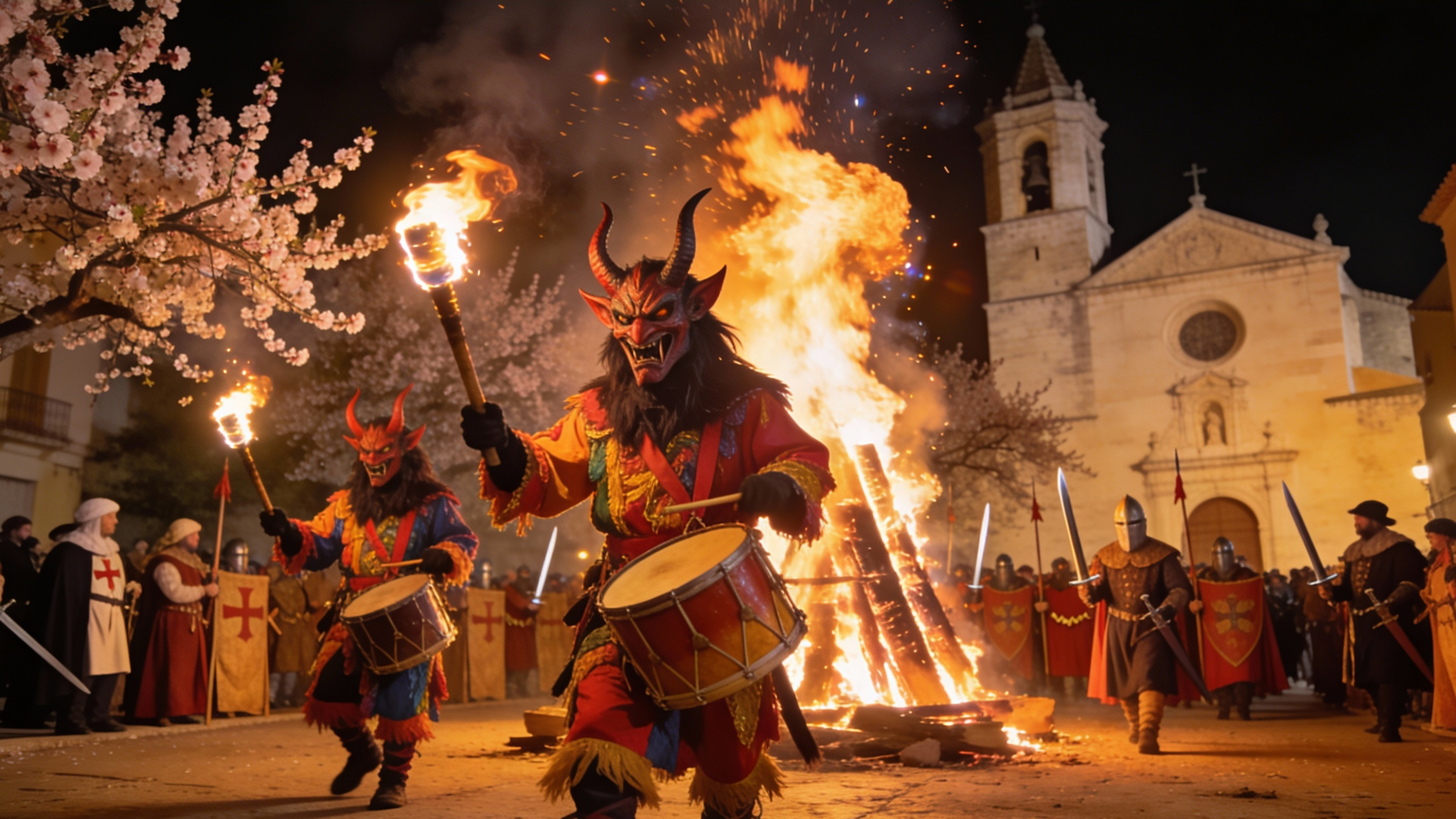
The year begins with two of Mallorca’s most iconic winter fiestas: Sant Antoni and Sant Sebastià. Sant Antoni, patron saint of animals, is celebrated with bonfires, parades and the traditional demons (dimonis), especially in Sa Pobla, which is known for some of the most impressive celebrations on the island. Shortly after, Palma honours its patron with Sant Sebastià, filling the city with open‑air concerts, bonfires and fireworks.
In February, the Fira de la Flor d’Ametler (Almond Blossom Fair) in Son Servera marks the blooming of the almond trees, when fields turn soft pink and white. Visitors can sample local products, discover almond‑based specialities and browse stalls with crafts and regional food.
Spring: Easter, Es Firó and Medieval Markets
Easter, or Semana Santa, is one of the most important religious periods of the year in Mallorca. In Palma and many inland towns, processions with hooded brotherhoods, statues and music create a solemn but memorable atmosphere, bringing together tradition, spirituality and community.
In May, Sóller hosts one of Mallorca’s best‑known fiestas: Es Firó. This lively festival re‑enacts the historic battle between locals and Moorish pirates, with mock battles, costumes and shouting filling the streets. Around the same time, the Capdepera Medieval Fair transforms the historic hilltop town into a medieval setting with artisan stalls, street performances and people dressed in period clothing.
June: Sant Joan and Sant Pere
June brings the magical Nit de Sant Joan (St John’s Night), when Mallorca welcomes summer with bonfires, fireworks and beach gatherings. In Palma and many coastal areas, people head to the sea at night to celebrate with friends, music and the symbolic “cleansing” of jumping over small fires or entering the water.
At the end of June, the Festes de Sant Pere (Saint Peter) pay tribute to fishermen and the sea. In ports such as Port d’Alcúdia and Port de Sóller you can see decorated fishing boats, maritime processions, fireworks and plenty of fresh fish and seafood on local menus.
Summer: Music, Moors and Christians
In summer the fiesta calendar becomes even busier. In August, La Patrona de Pollença is a major highlight, with another dramatic Moors and Christians re‑enactment, parades, music, fireworks and long nights of celebration. Festes de Sant Jaume in places like Alcúdia and Manacor honour Saint James with concerts, traditional dances, children’s activities and street parties.
July and August are also peak season for music. The Deià International Music Festival brings classical concerts to unique venues, while other towns organise jazz, pop and world‑music events. For something more active, Des Güell a Lluc a Peu – a night‑time pilgrimage from Palma to the Lluc Monastery – leads walkers along more than 50 kilometres of countryside under the stars.
Autumn: Wine, Harvest and Rural Life
When the heat of summer eases, Mallorca turns to harvest celebrations. In Binissalem, the Festa des Vermar celebrates the grape harvest with wine tastings, grape‑stomping, parades and even playful grape battles. In Vilafranca de Bonany, the Firo del Meló (Melon Fair) is dedicated to melons, including contests for the biggest fruit and creative melon‑based dishes.
Throughout autumn, many villages hold their own agricultural fairs featuring local produce, livestock, crafts and traditional music. These events give visitors an authentic insight into rural Mallorcan life beyond the main tourist season.
Experiencing Mallorca’s fiestas as a visitor
These are just some highlights from Mallorca’s packed fiesta calendar; almost every town has its own patron‑saint celebrations and seasonal fairs. For visitors, these dates are a fantastic opportunity to experience local culture up close, from religious traditions and historical re‑enactments to food, wine and live music. When planning your stay, you can use mallorcard.es to organise rental cars, activities and day trips around the main fiesta dates, so you catch the most interesting events while still enjoying beaches, villages and viewpoints across the island.